
Kelair Products
Dampers that are built beyond industrial-grade standards

How Every Kelair Damper Is Custom-Engineered to Your Specifications
Every Kelair damper is developed through a transparent, engineering-first process that aligns design, materials and performance to your exact operating conditions. Whether you are sourcing a single unit or evaluating multiple dampers for sale, our goal is to deliver a solution that meets airflow, temperature and reliability requirements the first time.
Step 1: Consultation & Application Review
Projects begin with collaboration between Kelair engineers, manufacturer representatives and your team. We document system objectives and constraints, airflow (CFM/FPM), pressure (static/velocity), temperature range, gas composition, particulate loading and available space. We also review installation considerations such as flange patterns, orientation and access for maintenance.
Step 2: Application-Specific Design
Based on the review, we select the appropriate damper type (e.g., louver for modulation, butterfly for compact isolation, diverter/tee for flow routing, slide gate for tight shutoff) and define geometry (round, square or rectangular), size, blade configuration and sealing method. Actuation is specified per use case, manual, pneumatic or electric, with options for normally open, normally closed or fail-safe positioning.
Step 3: Material Selection & Construction Methods
Material selection is based on operating conditions such as temperature, corrosion and particulate exposure. Kelair engineers evaluate each application to determine the most appropriate construction:
- Carbon steel: Used for general industrial applications where conditions are moderate and cost efficiency is important.
- Stainless steel: Ideal for corrosive or wet environments involving chemicals, moisture or acidic gases.
- Refractory-lined dampers: Designed for high-temperature or abrasive applications such as incineration, kilns and thermal oxidizers, providing heat and erosion protection.
Additional components, including shafts, bearings, packing glands and seals, are selected to handle thermal expansion, reduce wear and ensure reliable long-term performance.
Step 4: Performance Specifications & Buyer Guidance
Proper damper selection depends on key performance metrics that impact efficiency and reliability:
- Temperature rating: Ensures the damper can handle operating and peak temperatures.
- Pressure rating & pressure drop: Affects airflow resistance and overall system efficiency.
- Leakage classification: Based on standards like AMCA 500-D (e.g., Class I ≤ 4 cfm/ft² at 1.0″ WG), critical for isolation performance.
- Shutoff & modulation performance: Varies by type, butterfly dampers for strong isolation, louver dampers for precise control.
Understanding these specifications helps ensure proper airflow control, improved energy efficiency and longer service life.
Step 5: Compliance & Testing Protocols
Where applicable, designs align with recognized industry standards, including AMCA Standard 500-D for laboratory testing of air leakage and pressure drop. For projects requiring it, Kelair supports documentation and testing approaches consistent with applicable codes and specifications used across industrial ventilation and process systems.
Step 6: Fabrication, Lead Times & Delivery
All units are fabricated to order using qualified welding and quality-control practices. Typical lead times are 2–5 weeks depending on configuration and actuation. This enables fast deployment for both single-unit and multi-unit orders.
Step 7: Installation Planning & Ongoing Performance
Kelair assists with installation planning to ensure proper fit, orientation and access. Guidance on commissioning, damper sizing and maintenance (inspection of seals, bearings and actuators) helps extend service life and maintain performance.
Warranty & Lifecycle Value
Kelair products are backed by a 1-year warranty from installation or 18 months from ship date. Properly specified dampers improve airflow control and system efficiency, reducing operating costs in HVAC and process ventilation, where energy can represent a significant share of facility expenses. When applied with demand-based strategies (e.g., variable air volume), optimized dampers reduce fan power and enhance overall system performance.
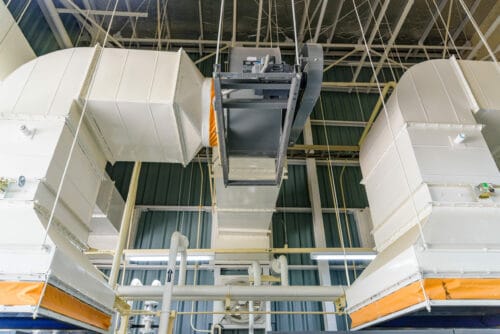
Kelair manufactures a full range of industrial dampers designed for airflow control, isolation and system protection. Each type is engineered with specific performance characteristics to match application requirements.
Our Manufacturer Sales Representatives and factory personnel are available to assist with damper selection, installation planning and system integration. We provide expert guidance to ensure optimal performance and long service life.
Dampers Manufactured by Kelair Products
Kelair manufactures a complete range of industrial dampers designed for airflow modulation, isolation and system protection. Each damper can be engineered in carbon steel or stainless steel, with optional refractory lining for high-temperature environments. Standard designs typically support up to 2 PSI pressure and 4000 FPM airflow, with higher capabilities available upon request.
Actuation options include manual, electric and pneumatic (with failsafe), allowing each damper to be configured for open/close or modulating control depending on the application.
Butterfly Dampers
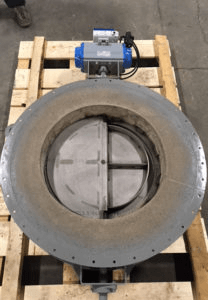
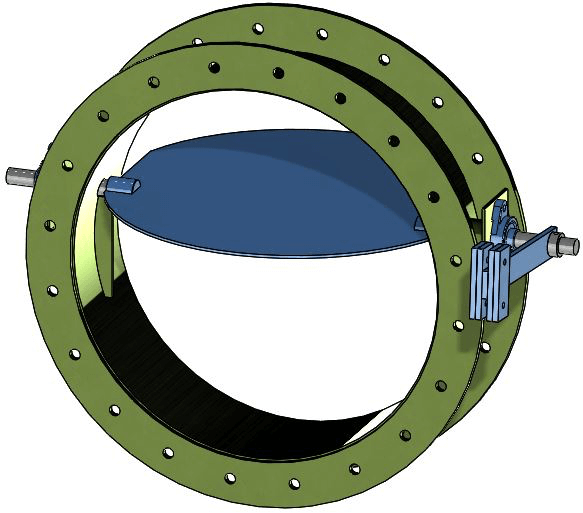
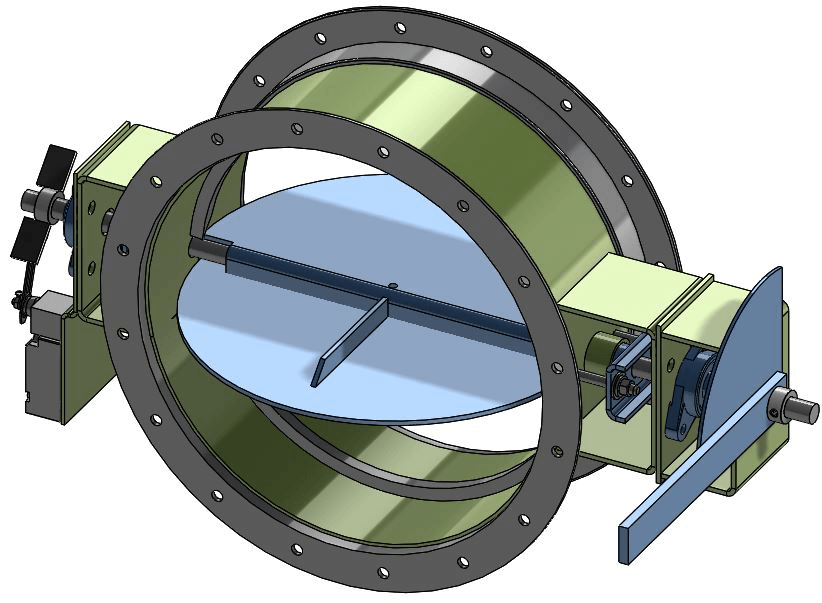
Butterfly dampers are among Kelair’s most economical and versatile solutions, designed for both flow control and low-leakage isolation. These dampers are commonly used in duct systems handling clean air, gas or light particulate and can also be engineered for corrosive or high-temperature environments. Typical specifications include:
- Sizes ranging from approximately 6″ to 144″
- Temperature capability up to ~1900°F
- Shutoff performance up to ~99%+ depending on seal type
Butterfly dampers are ideal for applications requiring compact design, quick actuation and consistent performance across temperature swings.
Industrial Ducting
Kelair's custom-designed industrial ductwork is used in various applications, including pneumatic conveying, air pollution control, and industrial ventilation systems.
Isolation Valves
Isolation valves provide positive shutoff in air and gas handling systems, especially in hazardous or high-temperature environments. These components are typically installed at branch points or system junctions to isolate sections for maintenance, inspection or emergency shutdown.
Compared to dampers, isolation valves are more commonly used in piping systems but often work alongside dampers to provide complete system control and redundancy.
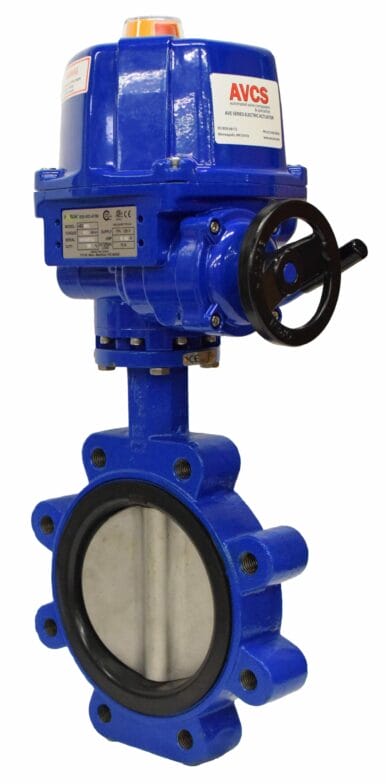
Butterfly Valves
Butterfly valves serve as flow control elements within piping and duct systems, regulating liquids, gases or particulates. These valves are often used in conjunction with industrial dampers to fine-tune process control. Available in multiple materials and configurations, butterfly valves are suitable for both low- and high-temperature applications and provide reliable, repeatable modulation.
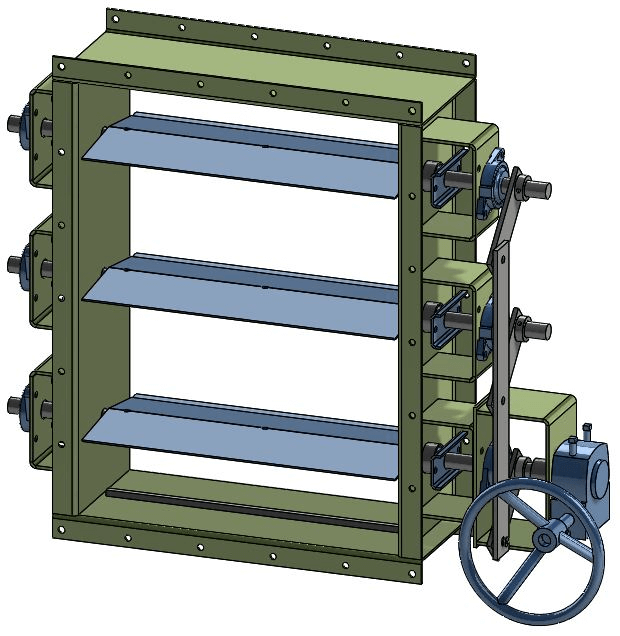
Louver Dampers
Louver dampers (multi-vane dampers) are designed for precise airflow modulation in large duct systems. Their multiple blade design allows for accurate control of air or gas distribution while maintaining relatively low pressure drop.
Typical specifications include:
- Sizes from 14″ to 132″
- Temperature capability up to ~2100°F (with refractory options)
- Pressure up to 2 PSI and 4000 FPM
- Shutoff up to ~99% depending on seals
Louver dampers are commonly used in power generation, fan inlet control, metal processing and air pollution control systems.
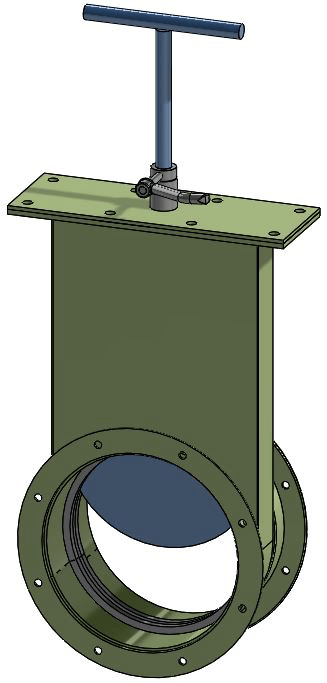
Slide Gate / Guillotine Dampers
Slide gate (guillotine) dampers are designed for complete isolation and can achieve near-zero leakage. These dampers use a sliding blade mechanism that cuts through airflow and particulates, making them ideal for abrasive or particulate-heavy environments.
Typical features include:
- Sizes from 4″ to 96″
- Heavy-duty construction for high-temperature and corrosive conditions
- Minimal moving parts for reduced maintenance
These dampers are best suited for dust collection, mining and bulk material handling systems where isolation is critical.
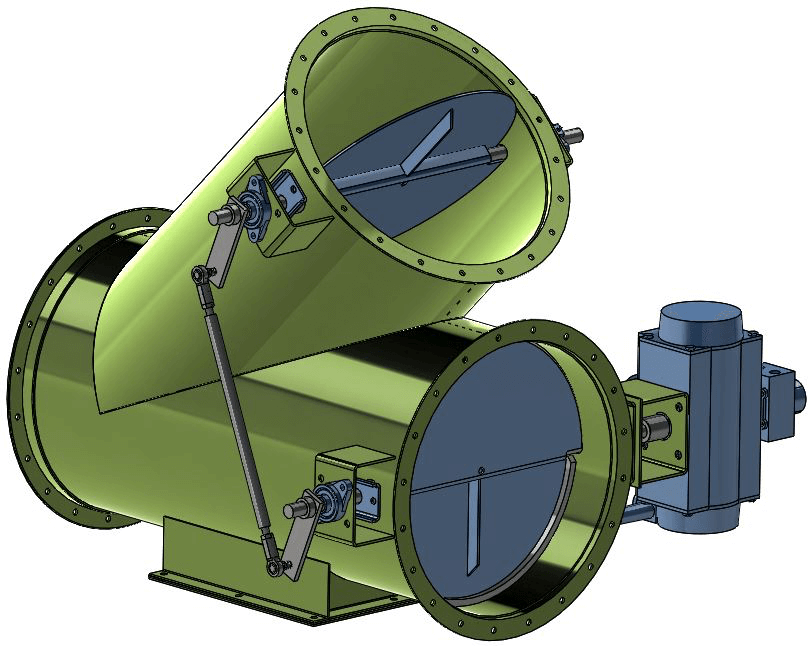
Diverter & Tee Dampers
Diverter and tee dampers are used to redirect airflow between two or more outlets. These dampers are widely used in incineration systems and thermal oxidizers, where process air must be routed between operational paths or bypassed entirely.
They are available in round, square or rectangular configurations and can be designed for modulating or full shutoff service depending on the application.
Refractory Dampers
Refractory dampers are engineered for extreme heat and can withstand temperatures up to 2100°F.
These dampers are commonly used in:
- Kilns and furnaces
- Waste incineration systems
- Thermal oxidizers
Refractory lining reduces heat loss, protects structural components and improves durability in corrosive or high-particulate environments.
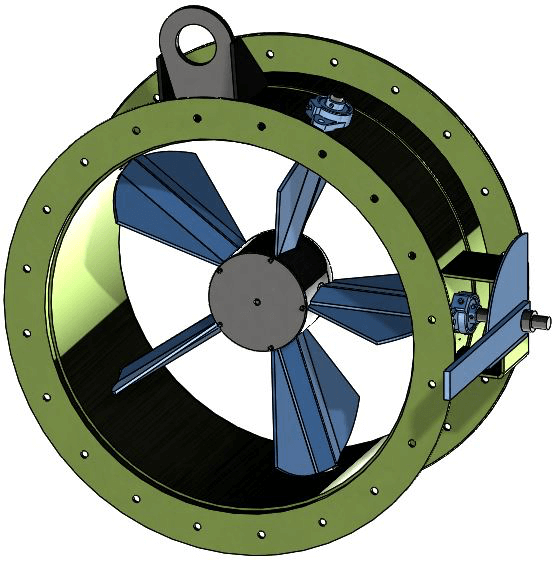
Inlet Vane Dampers
Inlet vane dampers regulate airflow entering fans and blowers to optimize performance and reduce energy consumption. By controlling airflow at the inlet, these dampers can significantly reduce horsepower requirements compared to outlet control methods.
They are widely used in HVAC and industrial ventilation systems where energy efficiency and precise airflow control are priorities and can also function as zone dampers in large-scale airflow systems.
Backdraft Dampers
Backdraft dampers are designed to allow airflow in one direction while preventing reverse flow. These dampers automatically open when airflow is present and close when flow stops or reverses.
Draft dampers are commonly used in ventilation systems to:
- Protect equipment
- Maintain system efficiency
- Prevent contamination or backflow
Stack Cap Dampers
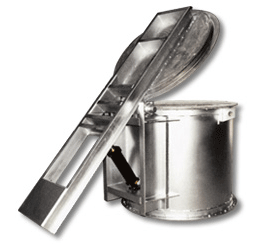
Stack cap dampers isolate exhaust stack openings during system shutdown. These dampers prevent foreign material from entering the system, reduce heat loss and minimize the stack effect caused by temperature differences.
They are especially useful in high-temperature exhaust systems where maintaining system integrity and efficiency is critical.