

Damper Actuators
High-Quality Electric, Pneumatic and Manual Damper Actuators from Kelair Products
Download our BrochureKelair Dampers Brochure

Actuators are used to control and operate dampers
Kelair furnishes electric, pneumatic and manual damper actuators on all of our custom engineered products used across multiple industries. Motorized damper actuators such as pneumatic actuators and electric actuators can be either 2 position control or modulating control. Additionally, the damper actuators can be ordered in four ways:
- Factory installed and ready to operate
- Shipped with the damper unattached for field installation
- Shipped directly to the job site for field installation
- Factory mounted and tested, custom supplied actuator packages

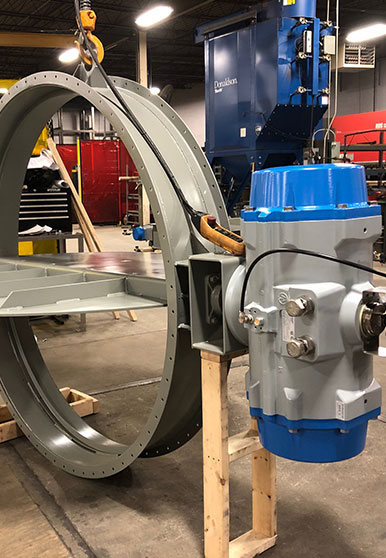
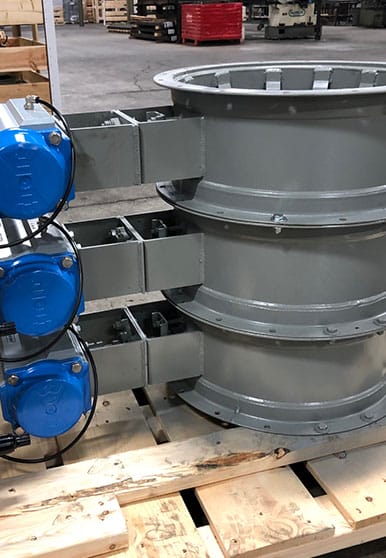
Pneumatic and electric for easy connectivity and flexibility
Pneumatic damper actuators are multipurpose positioning mechanisms used to accurately position industrial dampers in response to output signals of a pneumatic controller or electro-pneumatic transducer. They have high power to size ratios in confined spaces and flexible mounting configurations.
Electric damper actuators provide easy connectivity to digital controllers. The voltage source must be selected and typical voltages for these devices are: 24 VDC, 120 VAC or 240 VAC. All Kelair’s electric damper motor actuators are compact in size and easily installed. We will work with your specifications or we will readily determine the best damper operator to fit your specific application. All of our damper actuating packages will come prewired, pre-piped, calibrated and fully tested.
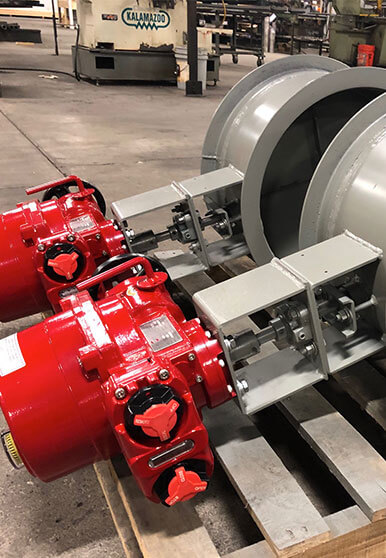
Electric & Pneumatic Damper Actuator Specifications & Features
Electric Damper Actuator
- ISO 5211 Mounting
- Wormgear drive for longer life and low maximum noise level of 50db
- Standard Enclosure IP-67, NEMA 4, 4X
- 20 Watt internal heater to minimize condensation due to temperature and humidity changes
- Squirrel cage, totally enclosed motor
Pneumatic Damper Actuator
- Available in double acting or spring return
- ISO 5211 mounting
- High cycle life with low friction bearings on all moving and sliding surfaces
- Modular design utilizing the same body and end caps for both double-acting and spring-return versions.
- Corrosion Resistant with PTFE coated body, polyester coated end caps and stainless steel fasteners
- Safety contained springs prevent hazards of inadvertent ejection during maintenance
- Optional mounting kits to cover any application and replacement of the obsolete unit
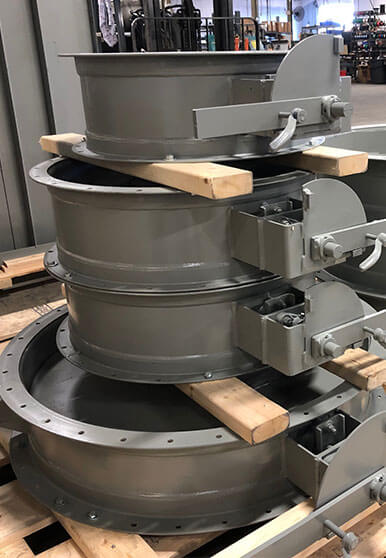
Manual Damper Actuator Specifications & Features
Kelair Offers three types of manual damper actuators:
- Lever & Quadrant:
- This type of damper actuator has a manual lever with a locking quadrant. The Lever allows for easy and precise adjustment. The locking quadrant is a threaded handle and clamp style for secure locking.
- Gear Operator Handwheel:
- This actuator is composed of an industrial worm gear operator that is a quarter- turn, self-locking type. The handwheel is 12 inches and there is a 30:1 gear ratio for easy operations
- Gear Operator & Chainwheel:
- This manual actuator is the same as above, but with a chain wheel & chain drop at a distance, in place of a hand wheel for remote operation. The chainwheel and chain drop at distance per customers specifications.
Want to learn more about electric vs. pneumatic actuators? Check out our overview here.
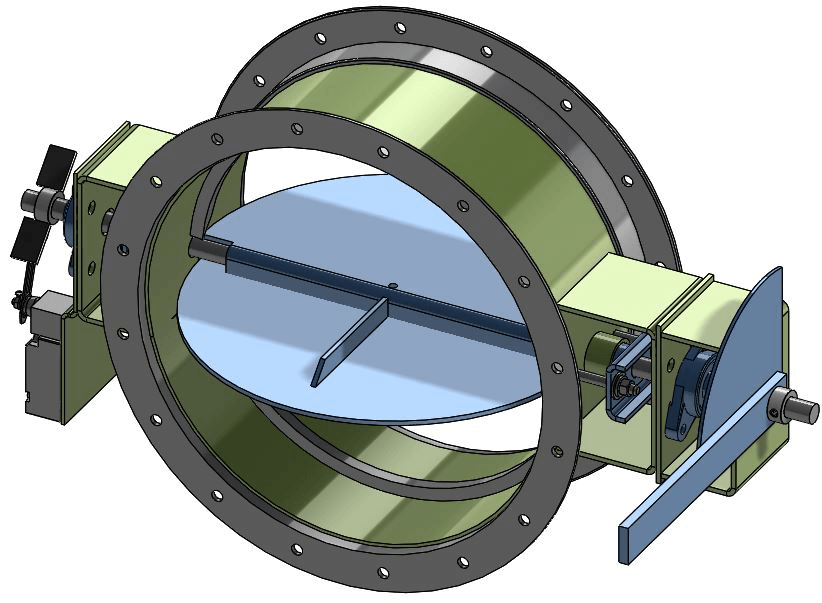
Butterfly Dampers
Butterfly dampers used by Kelair have the simplest design and the fastest turnaround. They are the economical choice for applications ranging from light duty to heavy duty and low temperature to high temperature.
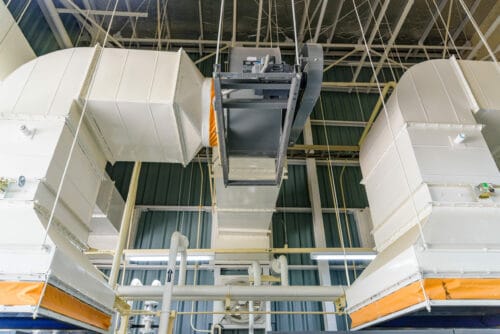
Industrial Ducting
Kelair's custom-designed industrial ductwork is used in various applications, including pneumatic conveying, air pollution control, and industrial ventilation systems.
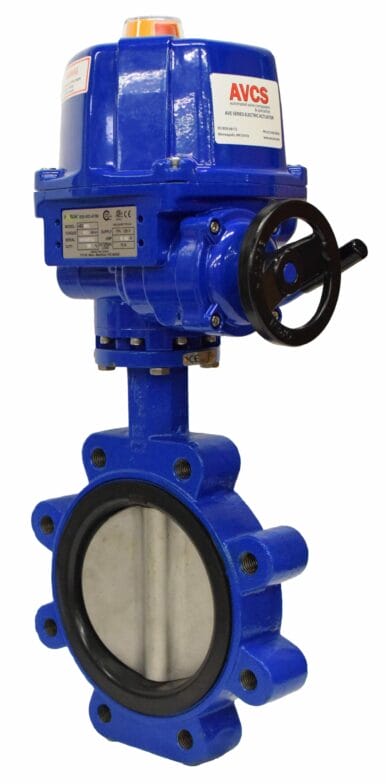
Isolation Valves
Isolation valves are typically placed at specific points throughout a pipeline or system. Among the most common spots for isolation valves to be installed include places where pipes branch off in multiple directions or at junctions.
Butterfly Valves
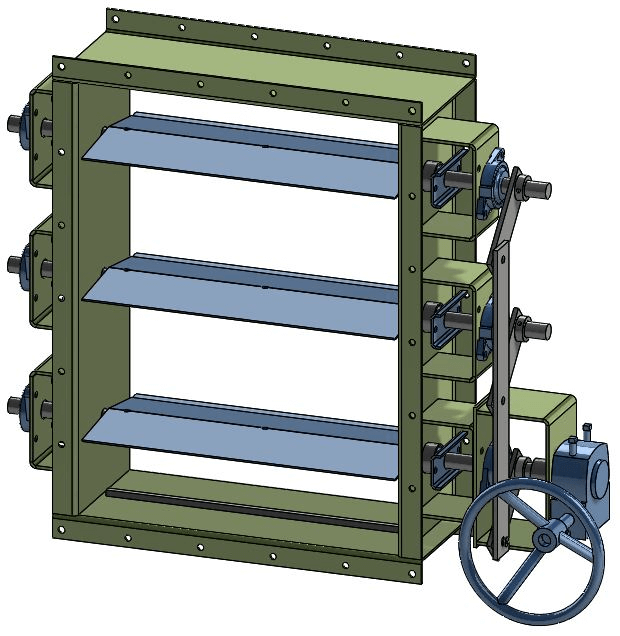
Louver Dampers
Kelair's Louver Dampers are applicable for both light, and heavy-duty industrial ventilation for high volume flow control, and isolation applications. This damper modulates the flow of air and gas in dry or wet conditions or can shut them off altogether.
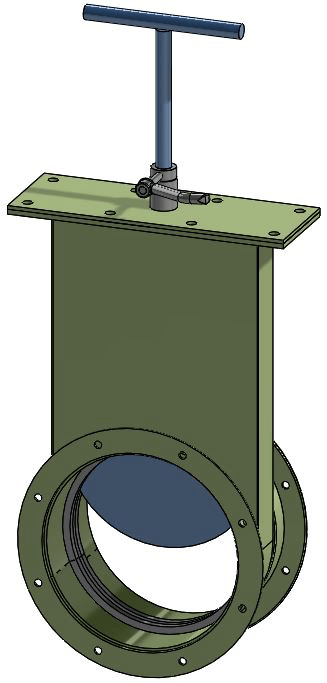
Slide Gate / Guillotine Dampers
These types of slide gate or guillotine dampers are used primarily as shut off devices. Kelair's rugged, heavy duty designs are available round or square with sizes from 4" up to 96" making them an ideal solution for industrial applications.
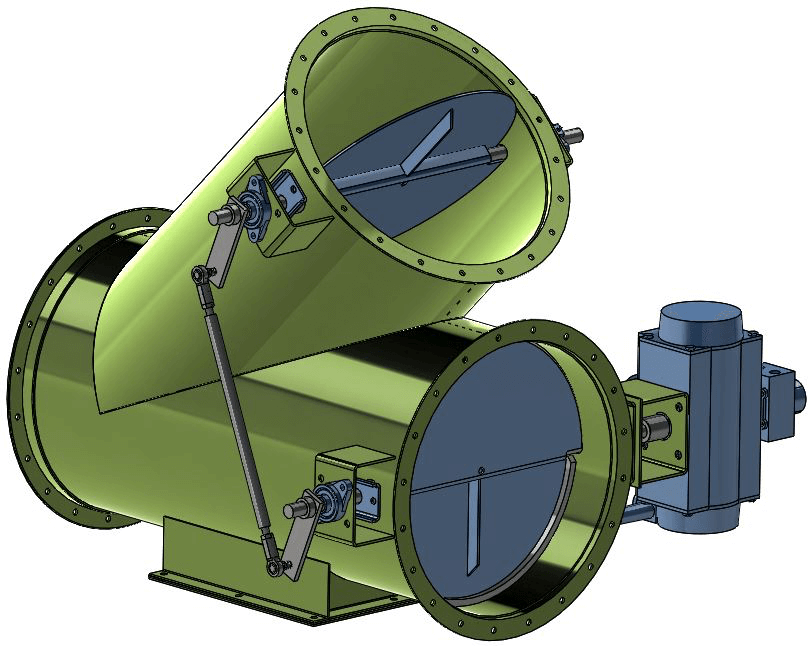
Diverter & Tee Dampers
Diverter Dampers or Tee Dampers are used to redirect air stream from one outlet to another. These types of dampers are widely used in incineration systems to divert process air and gas to the incinerator or by-pass to the atmosphere.
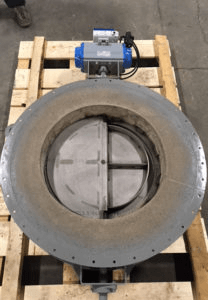
Refractory Dampers
Kelair’s Refractory dampers are manufactured to withstand temperatures up to 2100 F in corrosive, particulate and/or process gas environments. This unique design helps reduce heat loss and provide erosion protection for the frame.
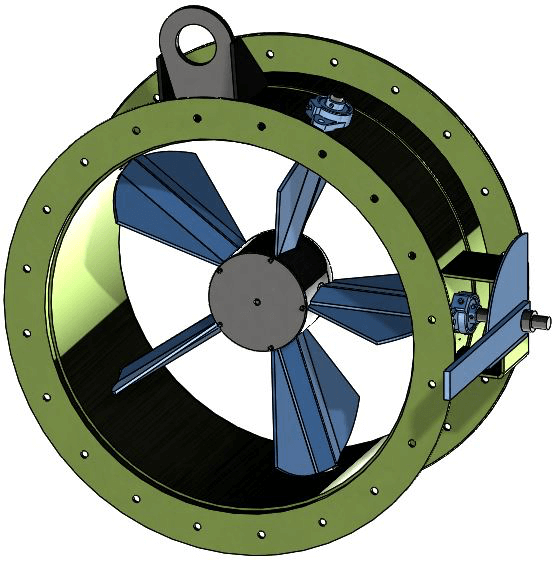
Inlet Vane Dampers
Inlet Vane Dampers work with fans and blowers to enhance their performance by controlling air volume and fan shut-off. Kelair’s design boasts no external linkage, eliminating pinch points and damage to the assembly.
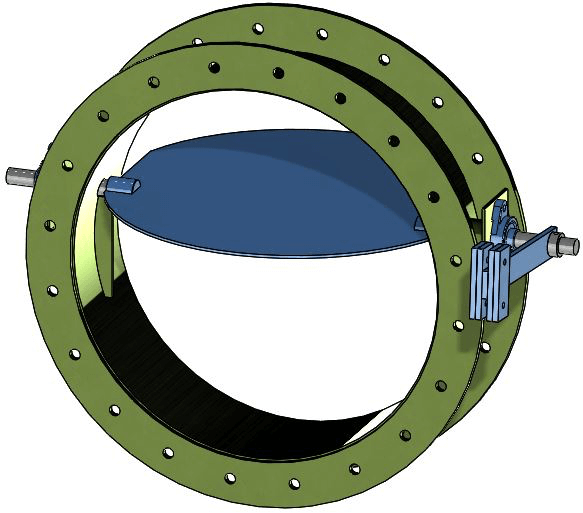
Backdraft Dampers
Kelair’s Backdraft dampers are engineered to allow airflow in one direction and prevent reverse airflow. Backdraft dampers control airflow in ventilation systems either to modulate or to shut off moving air through a fan opening when it is turned off.
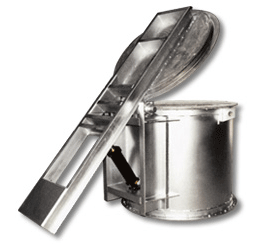
Stack Cap Dampers
Kelair's Stack Cap Dampers isolate the stack opening to prevent foreign material from entering and conserve warmth when the stack is shut down. The dampers deliver accurate airflow and isolation at high temperatures, reducing the stack effect.


