

Refractory Dampers
Kelair’s refractory dampers are manufactured to withstand temperatures up to 2100 F.
Download our BrochureKelair Dampers Brochure

High quality refractory dampers from Kelair are fabricated to withstand high temperatures
Most Kelair Damper products can be made as a refractory. These high-temperature dampers fit into a wide range of industrial combustion processes, including in the waste incineration and oil refining industries. Almost any industrial damper manufactured by Kelair can be produced as a refractory damper able to withstand temperatures up to 2100 degrees F. This added level of customization allows us to provide the widest range of damper solutions possible to our customers.
All of Kelair industrial dampers are engineered to order – adding the high-temperature refractory component is fast and easy. Call us today for a refractory diverter, refractory louver, butterfly refractory or another of our products to fit your needs. We are here to process your quote or order as simply as possible.

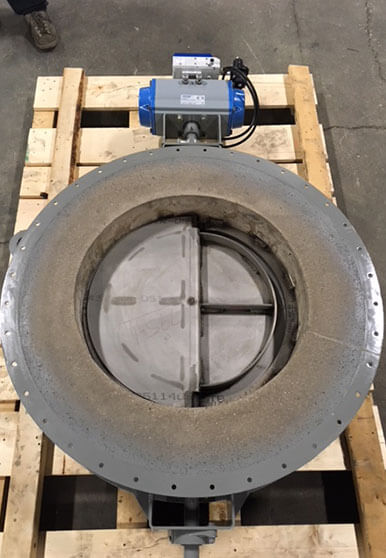
Types of High-Temperature Dampers and Their Functions
Kelair designs a full range of refractory dampers for different system needs:
- Butterfly Dampers & Round Butterfly Dampers: Compact, cost-effective solutions for shutoff or modulating control in high-temperature ducts.
- Louver Dampers: Ideal for airflow regulation in large duct runs, offering low pressure drop and reliable throttling.
- Diverter & Tee Dampers: Redirect or split airflow between duct legs; refractory-lined to handle corrosive flue gases.
- Guillotine Dampers: Heavy-duty isolation dampers designed for complete shutoff, even in extreme temperature zones.
- Backdraft Dampers & Stack Caps: Prevent reverse flow and protect stacks from heat loss and debris intrusion.
- Inlet Vane Dampers & Volume Control Dampers: Regulate fan capacity and energy use with precise airflow control.
All designs can be enhanced for high-temperature service with refractory lining, ensuring heat and erosion resistance across a wide range of industrial applications.
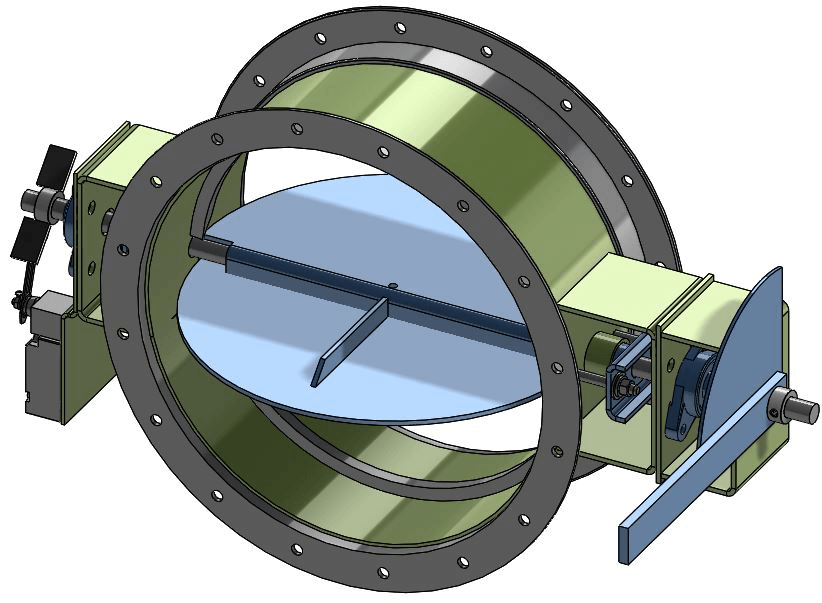
Butterfly Dampers
Butterfly dampers are among Kelair’s most economical and versatile solutions, designed for both flow control and low-leakage isolation. These dampers are commonly used in duct systems handling clean air, gas or light particulate and can also be engineered for corrosive or high-temperature environments. Typical specifications include:
- Sizes ranging from approximately 6″ to 144″
- Temperature capability up to ~1900°F
- Shutoff performance up to ~99%+ depending on seal type
Butterfly dampers are ideal for applications requiring compact design, quick actuation and consistent performance across temperature swings.
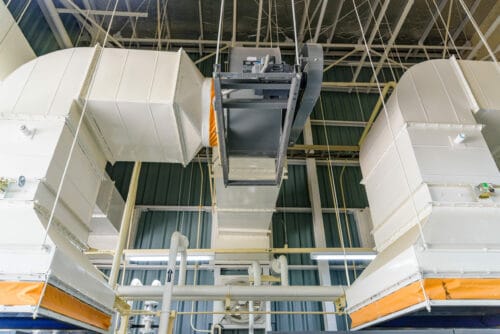
Industrial Ducting
Kelair's custom-designed industrial ductwork is used in various applications, including pneumatic conveying, air pollution control, and industrial ventilation systems.
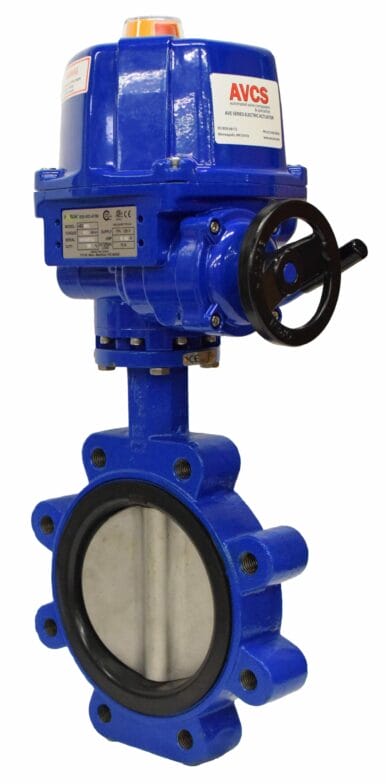
Isolation Valves
Isolation valves provide positive shutoff in air and gas handling systems, especially in hazardous or high-temperature environments. These components are typically installed at branch points or system junctions to isolate sections for maintenance, inspection or emergency shutdown.
Compared to dampers, isolation valves are more commonly used in piping systems but often work alongside dampers to provide complete system control and redundancy.
Butterfly Valves
Butterfly valves serve as flow control elements within piping and duct systems, regulating liquids, gases or particulates. These valves are often used in conjunction with industrial dampers to fine-tune process control. Available in multiple materials and configurations, butterfly valves are suitable for both low- and high-temperature applications and provide reliable, repeatable modulation.
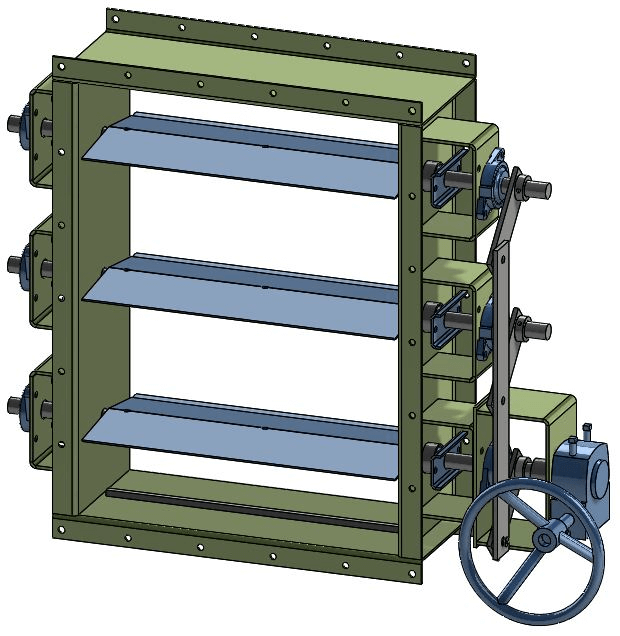
Louver Dampers
Louver dampers (multi-vane dampers) are designed for precise airflow modulation in large duct systems. Their multiple blade design allows for accurate control of air or gas distribution while maintaining relatively low pressure drop.
Typical specifications include:
- Sizes from 14″ to 132″
- Temperature capability up to ~2100°F (with refractory options)
- Pressure up to 2 PSI and 4000 FPM
- Shutoff up to ~99% depending on seals
Louver dampers are commonly used in power generation, fan inlet control, metal processing and air pollution control systems.
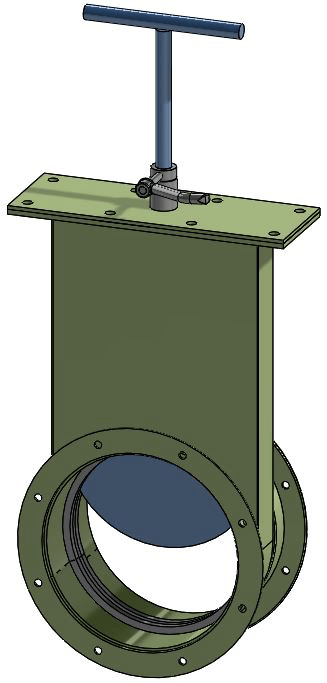
Slide Gate / Guillotine Dampers
Slide gate (guillotine) dampers are designed for complete isolation and can achieve near-zero leakage. These dampers use a sliding blade mechanism that cuts through airflow and particulates, making them ideal for abrasive or particulate-heavy environments.
Typical features include:
- Sizes from 4″ to 96″
- Heavy-duty construction for high-temperature and corrosive conditions
- Minimal moving parts for reduced maintenance
These dampers are best suited for dust collection, mining and bulk material handling systems where isolation is critical.
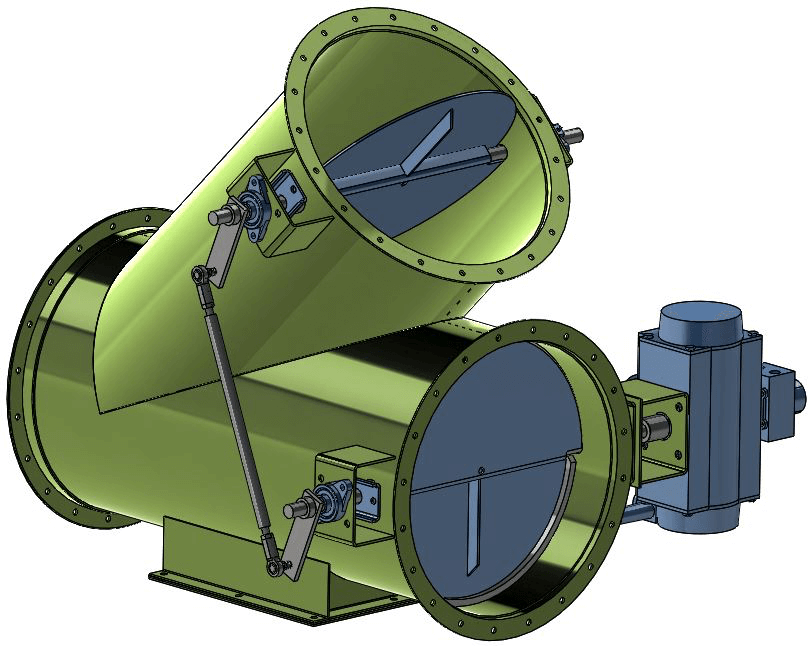
Diverter & Tee Dampers
Diverter and tee dampers are used to redirect airflow between two or more outlets. These dampers are widely used in incineration systems and thermal oxidizers, where process air must be routed between operational paths or bypassed entirely.
They are available in round, square or rectangular configurations and can be designed for modulating or full shutoff service depending on the application.
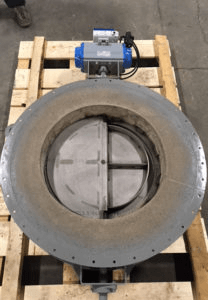
Refractory Dampers
Refractory dampers are engineered for extreme heat and can withstand temperatures up to 2100°F.
These dampers are commonly used in:
- Kilns and furnaces
- Waste incineration systems
- Thermal oxidizers
Refractory lining reduces heat loss, protects structural components and improves durability in corrosive or high-particulate environments.
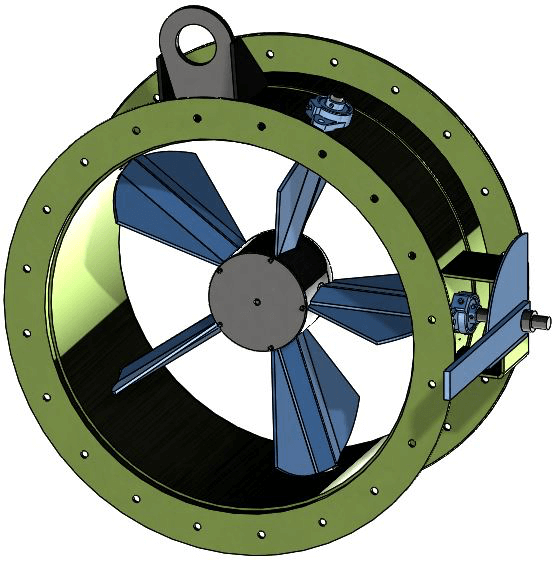
Inlet Vane Dampers
Inlet vane dampers regulate airflow entering fans and blowers to optimize performance and reduce energy consumption. By controlling airflow at the inlet, these dampers can significantly reduce horsepower requirements compared to outlet control methods.
They are widely used in HVAC and industrial ventilation systems where energy efficiency and precise airflow control are priorities and can also function as zone dampers in large-scale airflow systems.
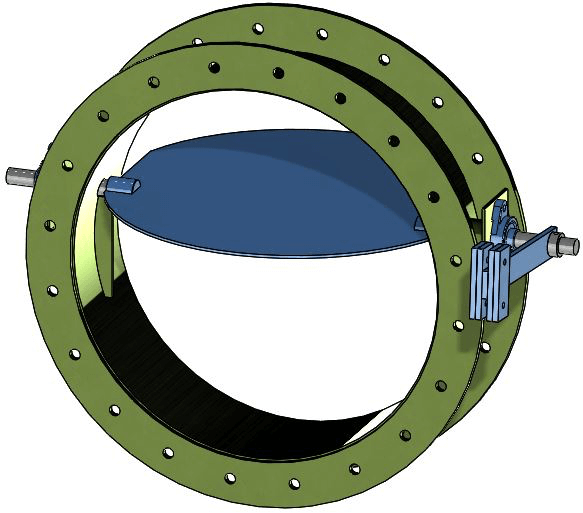
Backdraft Dampers
Backdraft dampers are designed to allow airflow in one direction while preventing reverse flow. These dampers automatically open when airflow is present and close when flow stops or reverses.
Draft dampers are commonly used in ventilation systems to:
- Protect equipment
- Maintain system efficiency
- Prevent contamination or backflow
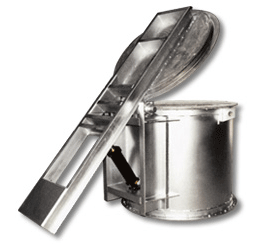
Stack Cap Dampers
Stack cap dampers isolate exhaust stack openings during system shutdown. These dampers prevent foreign material from entering the system, reduce heat loss and minimize the stack effect caused by temperature differences.
They are especially useful in high-temperature exhaust systems where maintaining system integrity and efficiency is critical.
Applications & Industries Using High-Temperature Dampers
Refractory dampers are essential to facilities that operate at extreme heat or require high-efficiency exhaust and combustion control. Common industries include:
- Power generation
- Petrochemical and refining
- Cement and aggregate production
- Pulp and paper
- Biomass energy systems
- Waste incineration and pollution control
- Glass and metals processing
- Mining and smelting
These dampers protect downstream equipment, improve thermal efficiency, and help plants meet emissions and safety standards. Their role in industrial ventilation, flue-gas management, and combustion isolation is critical to reliable system performance.
Custom Engineering & Configuration Options with Kelair
Each Kelair refractory damper is engineered to order. Our team collaborates with plant engineers to configure solutions based on:
- Temperature rating, pressure, and gas composition
- Damper geometry: round, square, or rectangular (4″ to 96″+)
- Actuation options: manual, pneumatic, or electric, including fail-safe and smoke/fire damper options
- Mounting compatibility: custom flange patterns for seamless installation
This high level of customization ensures precise performance and reduces costly retrofitting or modifications during commissioning.
- Which damper should I choose for high-temperature isolation?
- What about pressure drop?
- Can Kelair retrofit existing systems?
- How can I extend damper life?
